

It's a fair question, and an honest one. If you live in Hamburg, Amsterdam, or Brussels, you know that the sun doesn't always show up when you need it. Weeks can pass in November where the sky is a flat, unbroken grey from morning to night. So when someone tries to sell you a solar-powered lamp, the first thing you want to know is: what happens then?
The short answer is yes, they still work. But the longer answer is more interesting — and more useful if you're trying to decide whether a solar lamp is actually right for where you live.
What solar panels actually need
There's a widespread assumption that solar panels require direct, strong sunlight to charge. This makes intuitive sense — solar energy means sun, and sun means clear blue skies. But it's not quite accurate.
Solar panels respond to daylight, not sunshine specifically. The photovoltaic process is triggered by the presence of light in the visible spectrum, which exists even on overcast days. A heavily clouded sky in October in Cologne still delivers meaningful energy to a solar panel — less than a July afternoon in Seville, certainly, but enough to accumulate charge over the course of a day.
The difference is in efficiency. A solar panel in full direct sun might operate at 100% of its rated capacity. On a uniformly overcast day, that drops to somewhere between 10% and 25%, depending on cloud density, panel quality, and the time of year. This matters. It means the arithmetic changes.
The panel quality question
Not all solar panels handle low-light conditions equally. This is where the material used in the panel becomes relevant rather than just a spec sheet detail.
Most budget solar products use panels made with standard PET (polyethylene terephthalate) film — a cost-effective choice that works reasonably well in strong sun but loses efficiency quickly as light levels drop. ETFE, ethylene tetrafluoroethylene, handles diffuse light noticeably better. It has a higher light transmittance than PET — meaning more of the available light actually reaches the photovoltaic cells beneath — and it maintains that transmittance more consistently across angles of incidence, which matters when the sun is low on the horizon or light is coming from all directions on an overcast day.
In practical terms: a lamp with an ETFE panel in Amsterdam in November will accumulate more charge than an equivalent lamp with a PET panel in the same conditions. Not dramatically more, but meaningfully more — enough to make a real difference over a day of grey light.
When the sky genuinely doesn't cooperate
Here's where honesty is important. There are stretches of winter in northern Europe — multiple consecutive days of deep overcast, rain, or early darkness — where solar charging alone simply isn't enough. This isn't a flaw specific to any brand or product. It's physics.
The practical answer to this isn't to pretend the problem doesn't exist. It's to design around it.
The most sensible approach is a lamp that can charge two ways: from the sun when the sun is available, and from a cable when it isn't. USB-C charging — the same port now on most phones and laptops — means that keeping a solar lamp topped up during a difficult stretch of weather requires nothing more complicated than plugging it in for a few hours, the same as you'd charge anything else on your desk.
This dual-charging design doesn't undermine the solar functionality. It completes it. The goal is a lamp that spends most of the year living entirely on sunlight and only occasionally needs intervention — not a lamp that depends on a wall socket and happens to have a small panel on top as an afterthought.
How to think about this practically
If you're in northern Germany, the Netherlands, or Belgium, here's a realistic picture of how a well-made solar lamp would actually behave across the year.
From April through September, you'll charge almost entirely from sunlight. Days are long, light levels are reasonable even when overcast, and the panel will keep pace with typical evening use without any effort on your part. This is the majority of the year, and it's the period when you're most likely to be using a terrace lamp regularly anyway.
October and March are transition months. Charging will be less consistent. Some weeks fine, some weeks you'll plug in once or twice.
November through February is when you'll rely most on the USB-C option. Not every day — there are bright winter days even in Hamburg — but regularly enough that having the cable available matters. Think of it like keeping an umbrella in the hallway. You don't always need it, but you're glad it's there.
The question behind the question
When people ask whether solar lamps work in cloudy climates, they're usually really asking something else: will I end up with a lamp that's dead when I want to use it?
The answer to that depends less on where you live and more on what you buy. A lamp with a poor-quality panel, no backup charging option, and a battery sized too small for its output will let you down in any climate. A lamp built properly — with a panel that handles diffuse light well, a battery that stores a realistic day's worth of charge, and a USB-C port for the weeks when the sky simply won't help — will work reliably in Amsterdam in January.
The weather in northern Europe is genuinely difficult for solar products. The good ones are designed knowing that. The rest are designed for somewhere else.
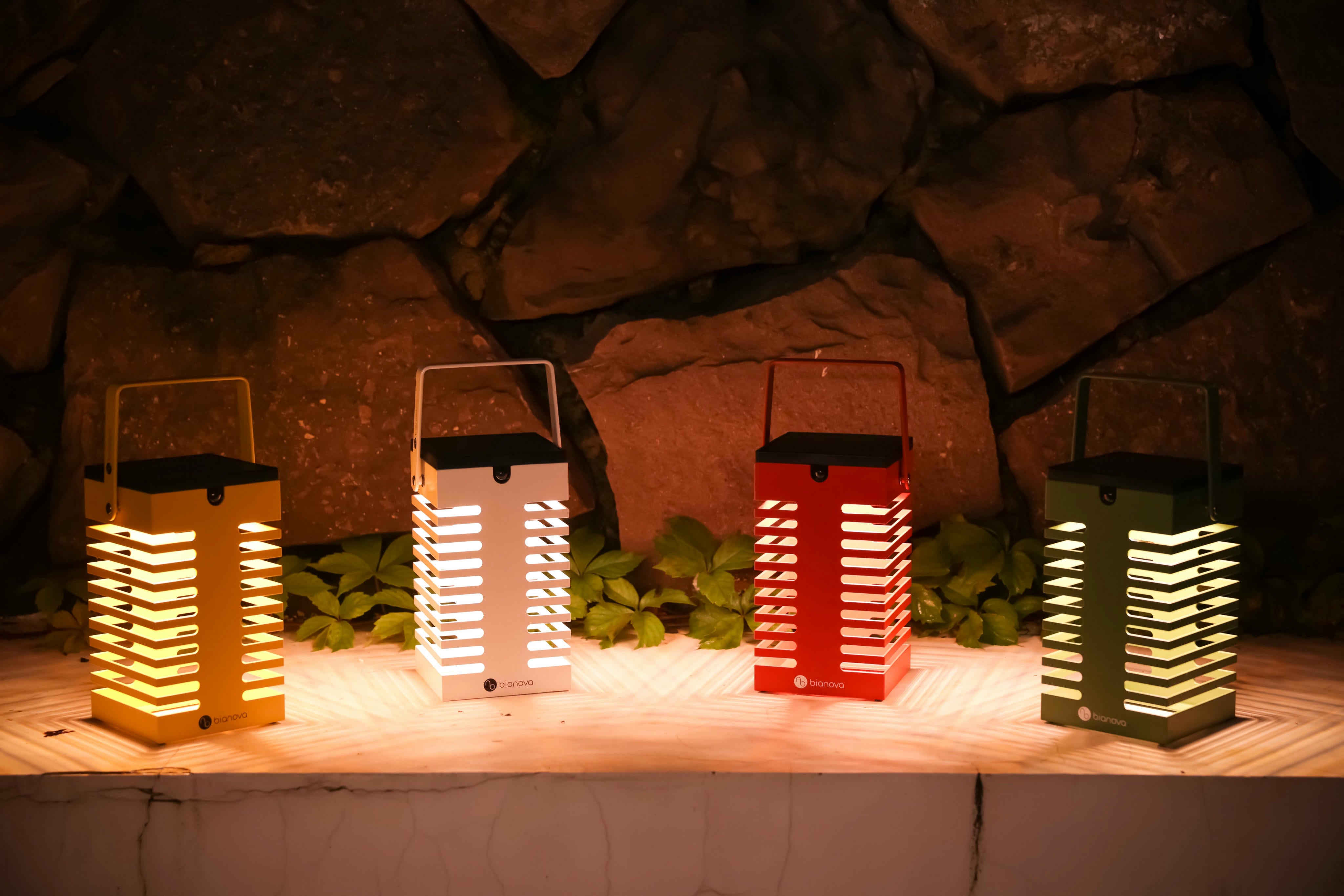
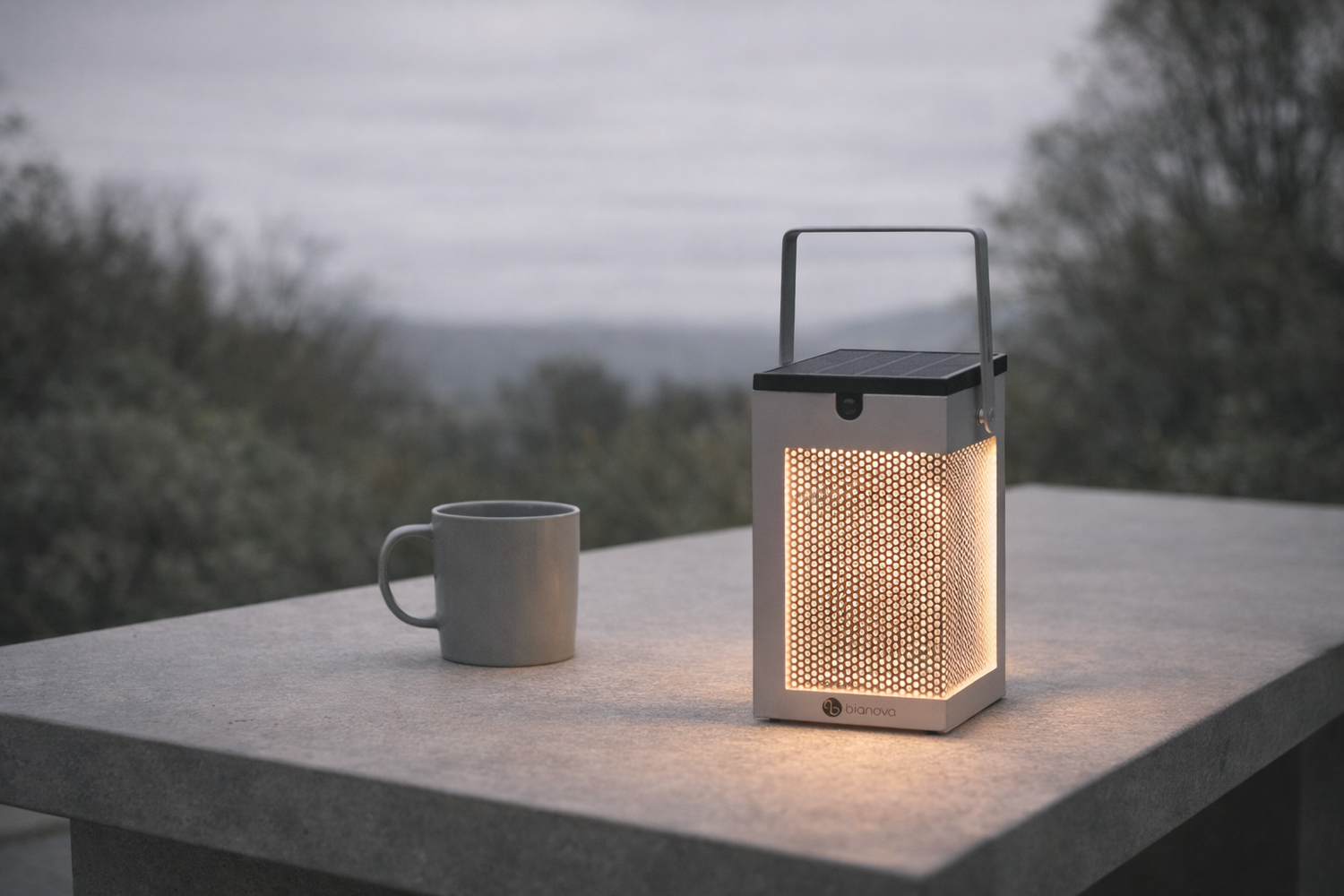
Bianova solar lamps feature ETFE panels and dual solar / USB-C charging — built for outdoor living in European climates, including the difficult ones.


Leave a comment
This site is protected by hCaptcha and the hCaptcha Privacy Policy and Terms of Service apply.